
 Emissions calculator


Reducing emissions without sacrificing profitability
At Castlepoint Station, a focus on efficiency, targeted fertiliser use and improved animal performance has helped reduce net emissions while maintaining a productive farming business.
On-farm successes:
• Total net greenhouse gas emissions reduced by 48%
• Gross emissions from the pastoral area reduced by 21%
• Lambing percentage increased from 125% to 135%
• Weaning weights increased from 19kg to 28kg
• A more resilient farm and improved land use
"Every farmer wants to leave the land better than when they found it."
Anders Crofoot
Watch this story
About Castlepoint Station
Anders and Emily Crofoot own Castlepoint Station, moving there in 1998 from a seventh-generation farm in New York State.
The 3,700ha station spans 12km of the Wairarapa coastline and supports a sheep and beef operation and farm forestry. Most of the land is steep to rolling hill country with a small proportion (less than 10%) made up of flats and terraces. The station has three alluvial valleys, separated by hills that in some places run north-south and in others east-west.
When the Crofoots bought the farm, it had been advertised as a 28,000-stock unit property. The couple were keen to bring this number down while maintaining profitability.
The challenge: Building a farm system fit for the land
Steep hill country, erosion-prone soils and dry conditions can put pressure on both farm performance and the environment.
The farm averages around 930mm of rainfall per annum. This occurs mostly during the winter months, causing waterlogged soils that then leads to pugging and erosion. The summers are usually dry.
However, wind is a bigger issue for the Crofoots than the uneven rainfall. Strong northwesterlies (regularly over 100km/hour) blow across the property, particularly during the spring equinox where the winds flatten not only the pasture but also its growth profile – losing up to as much as 8mm moisture some days.
This relentless wind-run, coupled with the variable aspect of the property and its summer dry profile make for some challenging management conditions, in particular maintaining soil productivity.
What changed on-farm
“Farming for the environment is essential out here,” says Anders. “We learned some hard lessons in the early years, but our focus on sustainability has helped us bring the best out of the land.”
Matched land use to land capability
The Crogoots worked with the regional council (Greater Wellington) to map the different land use capabilities (LUC) across the property.
This process identifies the physical limitations of the land (e.g. rock, soil, slope, erosion type and severity, and vegetation) and uses that to determine its capacity for long-term sustained production. For more on the LUC approach, see this handy Beef + Lamb NZ resource [PDF, 2 MB] .
Marginal and unproductive land at Castlepoint was retired, with some areas planted in forestry and others in an extensive poplar and willow pole programme aimed at stabilising erosion-prone slopes and providing shade for livestock in the summer. This mix of forestry suits the harsh growing conditions on the coast and enables an ongoing revenue stream at the same time as diversifying risk.
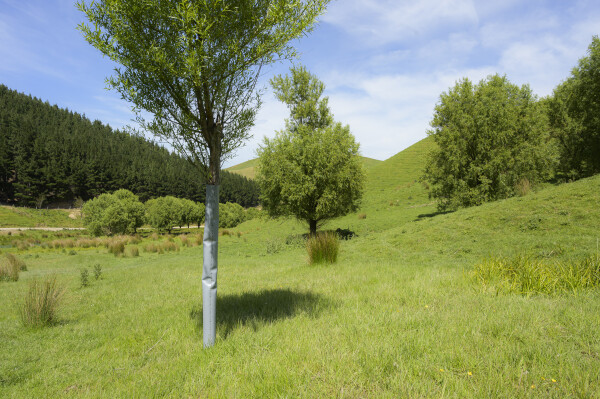
Poplar and pine planting at Castlepoint Station. (Photo: Dave Allen Photography)
For the parts of the farm sheltered from the northwesterlies, the Crofoots have concentrated their efforts on maintaining soil productivity and improving efficiency and animal performance.
Reduced soil disturbance
On the flats and terraces, direct drilling reduces soil disturbance and wind erosion. The Crofoots are also experimenting with deeper-rooting forages, such as lucerne and fescue, that extract moisture from the soil more effectively without compromising feed quality and help hold the soil together.
Lucerne and fescue, along with other novel forages such as plantain, plus clover, are helping lift capital stock performance. Rape and kale are also sown to help with feed supply and grazing management, especially in summer and again in late winter when covers are low.
Focused on animal performance
The Crofoots now have around 10,500 breeding ewes and their replacements, along with 400 beef cows and their replacements. This is a significant reduction in stock numbers from when they first took over, but not at the cost of their bottom line. They have increased their lambing percentages from 125% to nearly 135% - producing the same number of lambs but from fewer breeding ewes. Weaning weights have increased from 19kg to 28kg. The lower capital ewe numbers have allowed them to finish more of their own lambs, increasing profitability and spreading financial risk.
Anders sees their efforts as simply “good farming practice”, but what difference have they made for the climate?
The results
On-farm progress
• 48% reduction in total net emissions across the whole farm (includes tree planting and forestry sequestration)
• Improved animal performance - maintained production with fewer breeding ewes
• Increasing lambing percentage from 125% to nearly 135%
• Weaning weights have increased from 19kg to 28kg
• Direct drilling protects soil from erosion and moisture loss
• Poplar and willow planting improves slope stability and livestock shelter
• Reducing nitrogen fertiliser use, only applying it where and when it is needed
The Crofoots have been thinking about climate change and Castlepoint’s contribution for a while now, including in Anders’ various roles with Federated Farmers.
They use Farmax to get their greenhouse gas numbers and have also found Beef + Lamb’s calculator a handy tool. You can read more about these tools and others on our understand your farm’s emissions profile page.
| 2003 | 2011 | 2020 | |
| Gross emissions from pastoral area (tonnes CO2e/ha) | 3.75 | 3.18 | 2.96 |
| Total net emissions across the whole farm (tonnes CO2e) | 8,437 | 4,986 | 4,395 |
| Net emissions per hectare, taking pine forestry into account (tonnes CO2e/ha/yr) | 3.1 | 2 | 1.8 |
| Methane expressed as tonnes CO2e/ha | 2.79 | 1.97 | 1.84 |
| Methane expressed as tonnes/ha | 0.11 | 0.08 | 0.07 |
The main drivers of agricultural greenhouse gas emissions (methane and nitrous oxide) are:
- Amount of dry matter eaten
- Protein level of the diet
- Amount of nitrogen fertiliser applied
For the Crofoots, their emissions are driven by the sheep and cattle they run and the fertiliser they apply.
It was a proud moment when they realised that their on-farm actions had achieved a 21% reduction in net emissions from the pastoral area (minus the carbon sequestration) and a 48% reduction in total net emissions across the whole farm between 2003 and 2020 - as shown in the table above.
With their numbers in place and a solid track record of reductions underway, they are well placed to start developing a plan to manage them.
On-farm actions
“Every farmer wants to leave the land better than when they found it,” says Anders – a philosophy that has been at the heart of their approach to farming. Their actions over the years have done a lot for the environment, including the climate.
Reducing capital stock numbers has had a major effect. This directly reduces the amount of dry matter eaten, which in turn reduces greenhouse gas emissions.
At the same time, the focus on increasing animal performance and making overall productivity gains meant that farm profitability has been enhanced. This has been achieved by:
- Increasing lambing percentage
- Finishing animals faster and to higher weights
- Culling less productive stock
- Reducing nitrogen fertiliser use, only applying it where and when it is needed.
Adjusting their farm system to match the capabilities of the land has also helped. They have improved pasture management to optimise quality and production and to balance growth with utilisation. Retiring less productive areas from grazing and planting them in trees has generated an additional revenue stream both from forestry and the Emissions Trading Scheme. And they’re still working hard to support healthy soils on the property.
Next steps
Explore practical actions farmers are trialling on farm.
Lessons for other farmers
“Farming for the environment is essential out here. We learned some hard lessons in the early years, but our focus on sustainability has helped us bring the best out of the land.”
Anders Crofoot
- Focus on efficiency first. Small gains across multiple areas of the farm system can add up to meaningful reductions in emissions.
- Match land use to land capability. Not every hectare needs to be farmed the same way.
- Improving animal performance can help maintain production while carrying fewer animals.
- Protecting soil health supports productivity, resilience and environmental outcomes.
- Many emissions-reducing practices are simply good farming practices that can also strengthen business performance.
What actions could work on your farm?
Many of the changes made at Castlepoint Station are actions other farmers are already exploring around New Zealand. Discover what could work on your farm: