
 Emissions calculator


People, planet and profit
George and Sharon Moss use their greenhouse gas numbers, profitability data and science to get their two dairy farms operating as environmentally efficiently as possible while still making a profit.
On-farm successes
• Reduced nitrogen use from 130 units to 80 units
• Improving heifer genetics
• Methane reduction
• Nitrogen leaching from 63 - 53kg/ha/year (2017-2020)
"Following the numbers makes the decision-making process less stressful."
George Moss
Watch this story
About Pukerua and Tokoroa
The Mosses operate adjacent dairy farms just north of the Kinleith pulp and paper mill in south Waikato. Pukerua Farm is 70 hectares effective, milking 170 pedigree Friesians and Tokoroa Pastoral Farm is 67ha effective, milking 173 crossbred cows. They also own an adjoining 40ha drystock block.
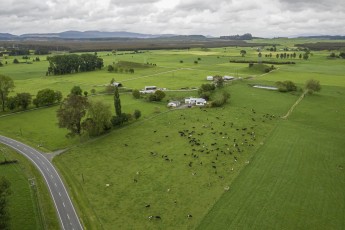
The Mosses dairy farm in Tokoroa (Photo: Dave Allen Photography)
The farm soils are Tāupo pumice and the average annual rainfall is 1,500mm. There aren’t any major waterways crossing the farms and being on flat land, there are no issues with erosion.
Both herds are managed as System 2, grazed on their respective farms with a small amount of feed brought in when required. During winter, cows are stood off on yards and adjacent quarry areas when needed.
Over time, stocking rates have been gradually reduced to match demand more closely with supply of homegrown feed. This has helped reduce nitrogen leaching. The reduction in stocking rates means both farms are now stocked at around 2.5 cows per hectare.
“When we started dairy farming forty years ago there was a perfect correlation between profit and production,” says George. “The environment wasn’t even in the discussion; the conversation was all about ‘feeding the world’."
"But we're increasingly aware that the planet is under pressure. Agricultural greenhouse gases are a contributor that we have to understand and manage."
As one of DairyNZ's climate change ambassadors, George is passionate about helping farmers meet the challenge of farming profitably in this era of climate change and increasing nutrient restrictions.
The challenge
George and Sharon Moss recognise that farming profitably now means more than simply increasing production. With climate change and freshwater impacts becoming harder to ignore, they need to reduce greenhouse gas emissions and nitrogen leaching while keeping their dairy farms financially sustainable.
The results
On-farm progress
• Environmental plan in place
• Genetic improvements for best-possible heifers
• High performance per cow with shorter lactation period
• Urease inhibitors a must
• Nitrogen leaching from 63 - 53kg/ha/year (2017-2020)
• Methane and nitrous oxide emissions have dropped
• Continues to operate profitably
George first became aware of the link between farming and the climate in the early-mid 2000s. Initially sceptical, he soon realised that the scale of scientific evidence was indisputable and that the issue wasn’t going to go away. At the same time, awareness of nitrogen’s impact on freshwater was growing and George and Sharon realised they needed to have a plan in place to help them lighten their farm’s environmental footprint.
The Mosses already had a good handle on the numbers around their farms' operating profits (back then, the key driver of the business). They sought help to work out what their agricultural greenhouse gas emissions (methane and nitrous oxide) were and what influenced them, and to understand their farms' nitrate leaching levels.
"Following the numbers makes the decision-making process less stressful," says George.
They used OverseerFM to find out their greenhouse gas numbers. "It is an industry tool that gives you a really good handle on the sources of the gases and their makeups," says George.
As a Fonterra supplier, they also get an environmental report that gives similar greenhouse gas information (along with other environmental indicators). This report also shows where you sit compared with other farms in the region.
DairyNZ also has a number of resources and calculators to help a farmer work out whether their business and farm system are 'future ready':
To find out more about these tools and others, see our Know your numbers page.
George says, "Finding out these numbers has helped enormously in setting a direction of travel for our farm that is better for the planet but still good for our bottom line."
George and Sharon's farm numbers for 2017-2020 show how they have managed this direction of travel.
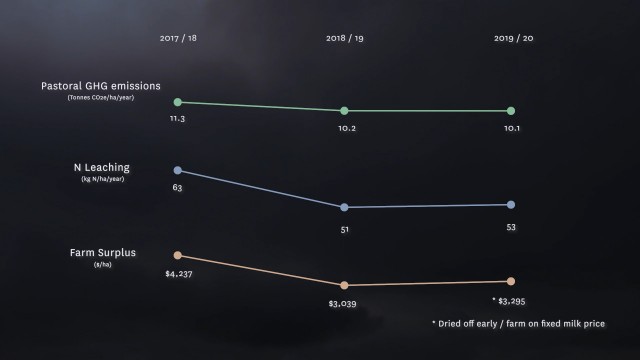
The Mosses farm numbers from 2017-2020
What changed on-farm
It's early days in George and Sharon's journey towards the 'sweet spot', balancing productivity and profitability while reducing the farm's impact on the land, water and climate.
They are trialling a number of different actions to reduce their greenhouse gas emissions, including:
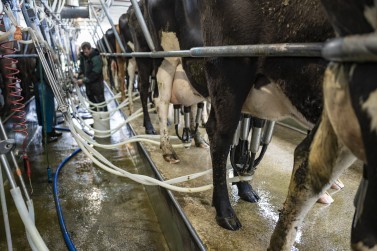
Milking time at the Mosses - individual animal performance is key (Photo: Dave Allen Photography)
- Reducing stocking rates
- Reducing purchased feed
- Using urease inhibitors
- Reducing nitrogen fertiliser (130 units to 80 units)
- Managing the timing and placement of nitrogen fertiliser, including using proof of placement
- Genetic improvements to get quickly to a high index herd
- Maintaining shorter lactation lengths, while chasing high performance per cow
What led to the changes?
The world has changed substantially since the Mosses began farming 40 years ago. Back then, the emphasis was on profitability. Now, George sees environmental considerations including reducing GHG and nitrogen leaching as equally important.
He began by working out his farm’s annual greenhouse gas emissions and his profitability. Then he started looking for ways to hit the sweet spot of lower-than-average emissions and higher-than-average profit.
George remains optimistic and tries to keep sight of the big picture.
“For many farmers in New Zealand, there is an opportunity to both reduce their greenhouse gases and lift their profitability. Once you understand where you sit within that matrix, you can understand which decisions you need to make.”
George Moss
What actions could work on your farm?
Many of George and Sharon's changes are actions other farmers are already exploring around New Zealand. Discover what could work on your farm: